Lost in Luanda’s Rhythm: How Slowing Down Unlocked Its Soul
You know what? I used to think I knew how to travel—until I got to Luanda. This city doesn’t shout; it whispers. And if you’re not moving slow, you’ll miss it entirely. I spent weeks here just walking, tasting, listening—and honestly, it changed everything. From vibrant markets to soulful music drifting from backstreets, Luanda revealed itself only when I stopped rushing. This is not a place you see. It’s one you feel. The rhythm isn’t in the guidebooks or tour itineraries. It lives in the quiet moments between sounds, in the space between steps, in the shared glance over a steaming plate of funge. To understand Luanda, you must surrender to its pace. You must let go of the need to see everything and instead allow the city to unfold around you, layer by layer, like the slow unfurling of a tropical leaf at dawn.
Arriving in Luanda: First Impressions vs. Reality
When I first stepped off the plane at Quatro de Fevereiro International Airport, the heat hit me like a wall. It wasn’t just warm—it was thick, alive, pressing against the skin. The drive into the city was a blur of honking horns, swerving motorbikes, and a skyline that flickered between gleaming glass towers and weathered colonial buildings with peeling paint and rusted balconies. My first impression was chaos. Streets seemed to have no rules, traffic no rhythm, and the pace felt frantic, almost hostile. I remember gripping my bag tightly, scanning faces, wondering if I’d made a mistake coming here alone.
But within days, something shifted. I realized that what I had interpreted as disorder was, in fact, a different kind of order—one that operated on intuition, community, and an unspoken understanding among locals. The city wasn’t chaotic; it was complex. The noise wasn’t aggression; it was energy. The rhythm was there, but it wasn’t obvious to someone rushing through. I began to notice the small things: the way street vendors greeted each other by name, the children playing soccer in open lots with handmade balls, the elderly women sitting in doorways, fanning themselves and watching the world go by with quiet dignity.
This is where the idea of slow travel became not just appealing, but necessary. Luanda does not reward the checklist traveler. You cannot ‘do’ this city in a weekend. It does not offer the kind of curated experiences found in more tourist-oriented destinations. Instead, it asks for presence. It asks you to sit, to observe, to listen. I let go of my itinerary. I stopped trying to map every landmark. I allowed myself to be confused, to get lost, to spend an entire afternoon watching fishermen mend their nets on the beach at Marginal. And in that surrender, I began to see the soul of the city—not in monuments, but in moments.
The Art of Strolling: Discovering the City on Foot
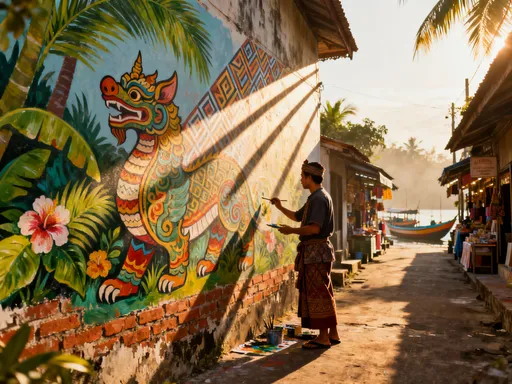
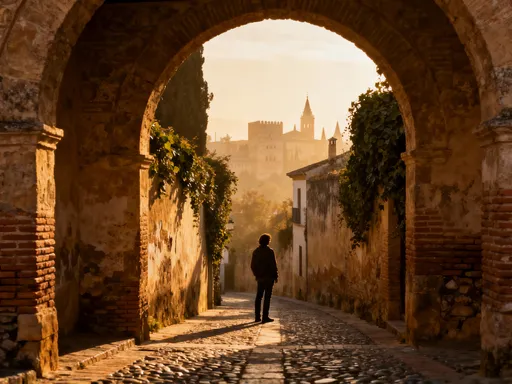
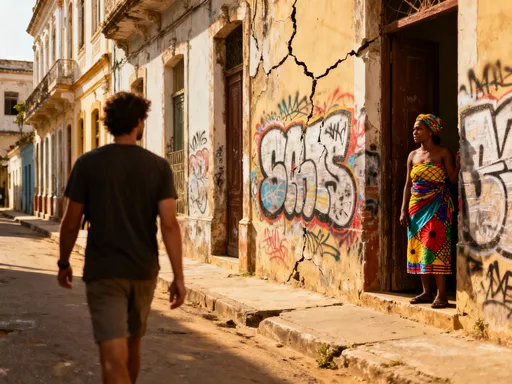
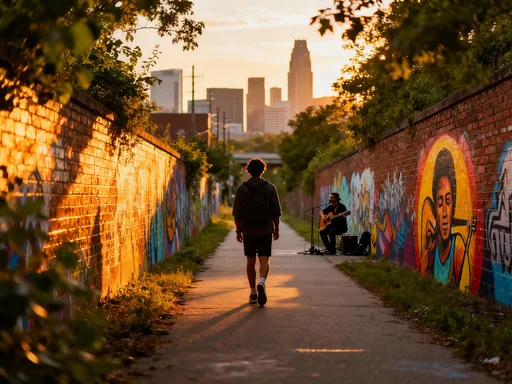
One of the most transformative decisions I made was to stop relying on taxis and start walking. At first, this felt risky. The streets were unfamiliar, the sidewalks uneven, and the sun relentless. But walking changed everything. It slowed my breath, lowered my heartbeat, and aligned me with the city’s true tempo. I began to explore neighborhoods like Baixa de Luanda, the historic lower city, where narrow cobblestone streets wind beneath colonial-era buildings with arched doorways and wrought-iron grilles. The walls were covered in vibrant graffiti—some political, some poetic, all deeply expressive.
In Ingombota, a bustling commercial district, I wandered past shops selling everything from secondhand shoes to imported electronics, past women balancing baskets of mangoes on their heads, past men playing checkers on makeshift boards in the shade. One afternoon, I stopped at a roadside cart where an elderly woman served freshly squeezed ginga juice—a tart, reddish drink made from hibiscus. She handed me a cup with a smile, and when I fumbled with the local currency, she laughed kindly and waved away the extra coins. We didn’t share a language, but we shared that moment, that sweetness, that pause in the day.
Another time, I sat on a low wall near a tailor’s shop where a man in a crisp white shirt worked a vintage sewing machine, stitching a suit by hand. He invited me to watch, and as the needle danced, he hummed a semba tune. We exchanged simple words—“bom dia,” “tudo bem?”—but mostly, we just existed together in the rhythm of the afternoon. These were not experiences I could have had from a car window. They required time, stillness, and the willingness to move at the pace of the city. Walking taught me that getting lost wasn’t a failure—it was the only way to truly find Luanda.
Markets as Cultural Hubs: More Than Just Shopping
No place in Luanda embodies the spirit of slow living more than its markets. Mercado Roque Sá da Bandeira, one of the city’s oldest and largest, is not a sanitized tourist bazaar. It is alive, loud, pungent, and deeply authentic. The moment I stepped inside, I was enveloped in a symphony of smells: dried fish, ripe papayas, crushed garlic, smoldering incense, and the earthy scent of fubá, a staple corn flour. Stalls overflowed with colorful fabrics, hand-carved wooden masks, bundles of medicinal herbs, and pyramids of ripe tomatoes.
I spent hours wandering the aisles, not to buy, but to observe. I watched women in headwraps bargaining in Kimbundu, their voices rising and falling like music. I saw mothers lifting fish to inspect the gills, nodding or shaking their heads with quiet authority. I noticed the way vendors greeted regular customers by name, slipping in an extra onion or a sprig of cilantro as a gesture of goodwill. This was not commerce as transaction—it was commerce as relationship.
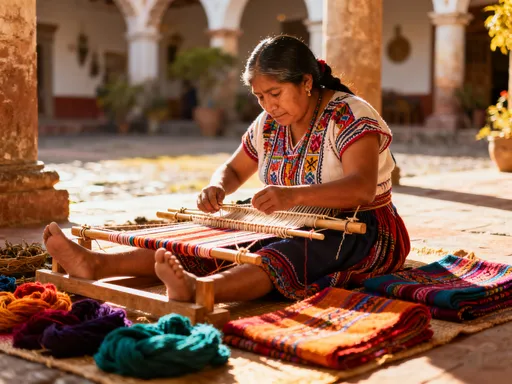
One vendor, a woman named Dona Elisa, noticed me lingering near her basket display. She gestured for me to sit on a wooden crate, handed me a cup of sweetened tea, and began to tell me—through gestures and broken Portuguese—how each basket was made by women in her village using reeds from the riverbanks. She showed me the patterns, explained their meanings: one for fertility, one for protection, one for joy. I ended up buying a small one, not because I needed it, but because I wanted to honor the story behind it.
Spending time in the market taught me that culture isn’t something you consume; it’s something you participate in. It’s in the way people move, speak, share, and care. A guidebook might list Mercado Roque Sá da Bandeira as a “must-see,” but only slow, patient presence allows you to see its heart. And in that seeing, you begin to understand not just Angola, but humanity—its resilience, its warmth, its deep-rooted sense of community.
Music in the Air: Following the Soundtrack of the City
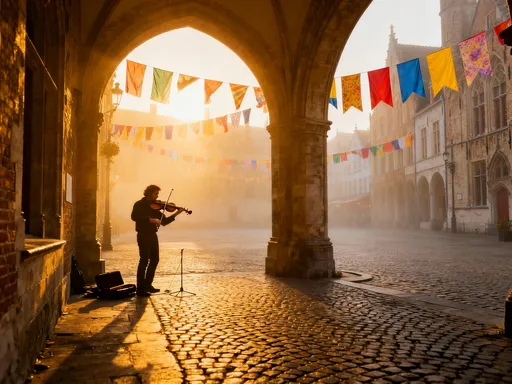
If Luanda has a soul, it sings. Music is not entertainment here—it’s the pulse of daily life. From the morning call to prayer blending with the sound of a radio playing kizomba, to the late-night drumming in neighborhood courtyards, sound is everywhere. I quickly learned that the best music wasn’t in fancy clubs or tourist shows, but in modest musseques—informal neighborhoods where families gather under string lights and local bands play until dawn.
One evening, I followed the sound of a live band to a small courtyard in Sambizanga. A group of musicians played semba on acoustic guitars, a cavaquinho, and hand drums. People of all ages danced—grandmothers, teenagers, toddlers clinging to their parents’ legs. No one was performing for an audience; they were simply living. I stood at the edge, hesitant, until an older woman took my hand and pulled me into the circle. “Dance,” she said in Portuguese. “It’s good for the heart.”
That night, I didn’t just hear Angolan music—I felt it. Kizomba, with its slow, sensual rhythm, is often misunderstood as romantic, but it’s more than that. It’s about connection, about trust, about moving in sync with another person. Semba, its faster cousin, is playful, energetic, full of wit and social commentary. Funaná, though more common in Cape Verde, has roots here too, with its accordion-driven beats and joyful defiance.
Over the weeks, I attended more of these gatherings. I learned that music here is history made audible. It speaks of colonialism, resistance, love, loss, and celebration. It’s passed down through generations, not in books, but in song. And when you listen—really listen—you’re not just hearing notes. You’re hearing stories, prayers, laughter. One musician told me, “We don’t play to be famous. We play so we don’t forget who we are.” In that moment, I understood that listening was a form of travel, a way of entering a culture not as a visitor, but as a witness.
Food as Connection: Meals That Built Bridges
In Luanda, eating is never just about nourishment. It’s ritual, it’s relationship, it’s love. I quickly learned that the best meals weren’t in restaurants with menus, but in family-run tascas—small, unmarked eateries tucked into alleyways or living rooms. These places had no websites, no reviews, no reservations. You went when the food was ready, and you ate what was made.
One afternoon, I followed the smell of onions and palm oil to a tiny kitchen in Maianga. A woman named Dona Lurdes was stirring a large pot of muamba de galinha, a rich stew of chicken, okra, and palm butter, served with funge, a stiff cassava porridge. She gestured for me to sit on a plastic stool. “Come,” she said. “Eat.” There was no menu, no price listed. Just warmth, steam, and the promise of a shared meal.
She handed me a ball of funge and showed me how to use it to scoop the stew—no utensils, just hands. “This is how we eat,” she said with a smile. As we ate, neighbors stopped by, greeted her, took a plate, sat with us. A man told a joke, and the table erupted in laughter. A child offered me a piece of mango. No one asked who I was or why I was there. I was simply included.
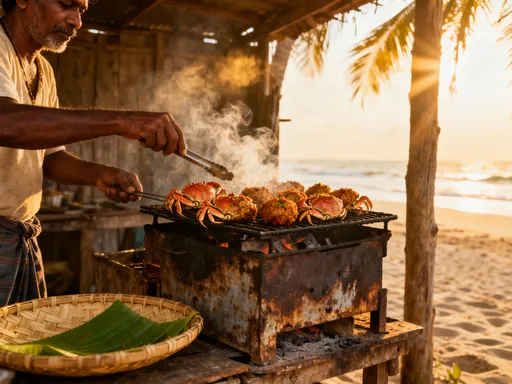
That meal taught me more about Angolan hospitality than any book could. Food here is not a commodity. It’s an offering. It’s a way of saying, “You are welcome. You belong.” And in that belonging, I found a deep sense of peace. I began to seek out these moments—early morning broas (sweet buns) with fishermen at the dock, late-night piri-piri chicken with young musicians after a set, shared cups of strong coffee in tiny cups at roadside stands. Each bite was a bridge, each meal a conversation, each flavor a memory.
Language, Laughter, and Learning to Listen
Portuguese is the official language of Angola, but communication here goes far beyond words. In my early days, I struggled—my textbook phrases felt stiff, my pronunciation clumsy. But I quickly learned that Angolans are patient, generous with their time, and quick to laugh—especially at themselves. Humor became our common language. A shared smile, a gesture, a mimed action—these often bridged the gap more effectively than any dictionary.
I remember trying to ask for directions to the post office. I said “correios,” but mispronounced it as “correias,” which means “belts.” The man I asked looked confused, then burst out laughing. Instead of correcting me harshly, he mimed buckling a belt, then pointed down the street and said, “Correios—mail!” We both laughed, and he walked with me for ten minutes to make sure I found it. That moment didn’t feel like a failure. It felt like a connection.
Over time, I picked up more phrases—“muito obrigada,” “com licença,” “está tudo bem”—but more importantly, I learned when not to speak. I learned to sit quietly in a market, to watch, to absorb. I learned that listening isn’t just about hearing words. It’s about noticing tone, rhythm, silence. It’s about reading faces, watching hands, feeling the energy in a room. In slowing down, I created space for real human exchange. I wasn’t just observing culture—I was participating in it. And in that participation, I found a deeper kind of understanding, one that transcended language.
Why Luanda Changes You—If You Let It
In the end, Luanda is not a destination you conquer. It’s a place that quietly reshapes you. It doesn’t dazzle with grand monuments or polished attractions. Instead, it reveals itself in the everyday—the woman singing as she washes clothes by the river, the boy balancing a tray of sodas on his head, the old man playing chess under a mango tree. It’s in the warmth of an unexpected invitation, the patience of a stranger, the shared silence over a meal.
Spending weeks here taught me that travel is not about how many places you see, but about how deeply you see them. It’s not about collecting photos, but about collecting moments. Luanda asked me to slow down, to be present, to let go of control. And in doing so, it gave me something rare: a sense of belonging, even as a visitor. It reminded me that the world is not a checklist, but a living, breathing, singing thing.
This city, with all its contrasts—modern and traditional, loud and quiet, chaotic and serene—offers a masterclass in presence. It shows us that beauty exists not in perfection, but in authenticity. That connection is built not in grand gestures, but in small, shared moments. That the soul of a place is not in its landmarks, but in its people.
So if you go to Luanda, don’t rush. Don’t come to see it. Come to live in it. Walk its streets without a map. Sit in its markets without buying. Dance in its courtyards without knowing the steps. Let the rhythm find you. Let the city whisper its secrets. And when you leave, you won’t just carry memories—you’ll carry a piece of its soul.