Wandering Through Time: Where Stone Walls Whisper Stories
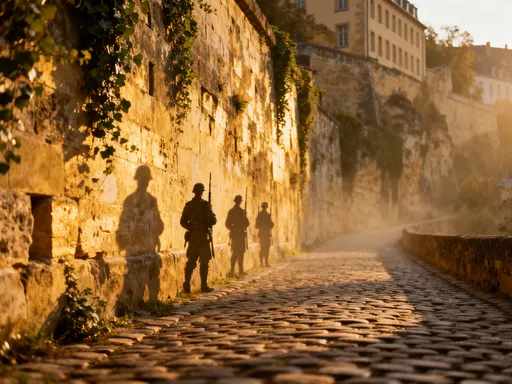
Have you ever walked through a city and felt like the buildings were watching you? In Luxembourg City, that’s not just a feeling—it’s reality. Between cobblestone alleys and towering fortifications, I discovered a place where history isn’t displayed behind glass but lives in the walls themselves. This is more than sightseeing—it’s stepping into centuries of layered stories, one landmark at a time. Nestled deep in Western Europe, this compact capital offers an extraordinary journey through time, where every stone has borne witness to change, conflict, and continuity. Here, the past is not preserved in museums alone; it shapes the very streets, bridges, and homes where modern life unfolds.
Arrival: First Glimpse of a Hidden Gem
As the train glides into Luxembourg City’s central station or the car climbs the winding roads from the south, the first impression is one of elevation—both literal and symbolic. Perched atop a dramatic plateau carved by the Alzette and Pétrusse rivers, the city reveals itself in layers. Modern glass-fronted offices stand shoulder to shoulder with centuries-old fortifications, creating a skyline that feels both grounded and aspirational. The contrast is not jarring but harmonious, a testament to a nation that honors its past without being bound by it. One of the first architectural encounters for many visitors is the Grand Duchess Charlotte Bridge, an elegant structure that spans the Pétrusse Valley with quiet dignity. Its sweeping arches and sandstone façade echo the city’s enduring character—resilient, refined, and deeply rooted.
What sets Luxembourg City apart from other European capitals is not just its size—compact and walkable—but the way history permeates daily life. Unlike cities where historic centers are preserved as isolated enclaves, here the old and new coexist in constant dialogue. A businesswoman in a tailored coat passes beneath a medieval gate on her way to a meeting; children play near cannon emplacements turned into park benches. This seamless integration makes the city uniquely immersive. There’s no need to “visit” history—it’s already here, in the air, in the streets, in the way people move through space. For travelers seeking authenticity, this balance offers a rare experience: a living city that remembers its past without performing it.
The arrival experience also benefits from Luxembourg’s reputation for efficiency and cleanliness. Public transportation is punctual and well-connected, with trams and buses linking the train station to the heart of the old town in minutes. Yet even as you glide through the modern transit system, the landscape continually reminds you of what lies beneath—literally and figuratively. Signs point to “casemates,” “ramparts,” and “fortifications,” as if the city itself is inviting you underground, into its hidden veins. This subtle orientation primes visitors for discovery, transforming what might be a simple entry into a narrative beginning—a threshold between the ordinary and the storied.
The Bock Casemates: Walking Beneath the City’s Skin
Beneath the surface of Luxembourg City lies a network that once served as its beating heart of defense—the Bock Casemates. Carved directly into the soft sandstone cliffs of the Bock Promontory, these underground tunnels stretch over 17 kilometers, forming one of the most extensive fortified systems in Europe. Walking through them today is like stepping into the city’s subconscious. The air grows cooler, the light dims, and every footstep echoes with a resonance that feels almost sacred. Stone arches curve overhead, and narrow passageways branch off into darkness, revealing gun emplacements, sleeping quarters, and storage rooms—all hewn from solid rock. It’s a space where imagination collides with history, and the weight of centuries presses gently against your shoulders.
The origins of the casemates trace back to the 17th century, when the Austrians expanded existing fortifications originally built by the Spanish. Over time, the network was continually modified by successive occupying powers—French, Spanish, and Prussian—each adding their own layer of strategy and engineering. What makes the Bock Casemates remarkable is not just their scale but their ingenuity. Designed to house up to 1,200 soldiers and withstand prolonged sieges, they included ventilation shafts, water cisterns, and even a bakery. Today, visitors can explore a well-preserved section of the tunnels, guided by informative plaques and occasional audio narrations that bring the past to life without overwhelming the atmosphere. The experience is cinematic in the best sense—immersive, atmospheric, and deeply human.
For the best experience, visiting early in the morning or late in the afternoon is recommended. Midday tours can be crowded, especially during peak tourist seasons, and the narrow passages make large groups feel constricted. Opting for a guided tour offers deeper insight, particularly when led by a local historian who can share lesser-known anecdotes—such as how soldiers once communicated through coded knocks on the walls or how the tunnels were used during World War II as air raid shelters. However, even a self-guided walk allows for moments of quiet reflection, where the imagination can roam freely. Children often find the casemates especially fascinating, drawn to the sense of adventure and mystery. Families can make it an interactive experience by turning it into a historical scavenger hunt, looking for specific features like cannon ports or ventilation grates.
Accessibility is thoughtfully considered. While the terrain is uneven in places, handrails and lighting ensure safety, and the entire route is manageable for most visitors with moderate mobility. Rest areas are available, and the cool temperature—around 12°C year-round—provides a welcome relief on hot summer days. What emerges from the visit is not just an appreciation for military engineering but a deeper understanding of how people lived, defended, and endured within these walls. The Bock Casemates are not a monument to war but a tribute to resilience, ingenuity, and the quiet courage of those who once walked these same paths in darkness.
Notre-Dame Cathedral: Silence Amidst Splendor
At the heart of Luxembourg City stands a sanctuary of stillness—the Notre-Dame Cathedral. Originally built in the early 17th century as a Jesuit church, it was elevated to cathedral status in 1962 and remains the principal place of Catholic worship in the Grand Duchy. Externally, it presents a striking fusion of architectural styles. The façade blends late Gothic elements with Art Nouveau influences, particularly evident in the delicate stonework and the ornate rose window above the entrance. Twin bell towers rise symmetrically, their copper domes gleaming softly under sunlight, while the interior unfolds in a harmonious expanse of cream-colored stone and soft light. It is a space designed not for spectacle but for contemplation.
Stepping inside, the shift in atmosphere is immediate. The noise of the city fades, replaced by a quiet so profound it feels almost tangible. Sunlight filters through stained glass windows, casting jewel-toned patterns across the stone floor. One window, dedicated to Saint Peter, glows with deep blues and reds, while another commemorates the Virgin Mary in hues of gold and violet. The play of light changes throughout the day, transforming the interior into a living canvas. On a cloudy afternoon, the space feels introspective; in the late morning, when beams pierce through at an angle, it feels almost celestial. Visitors often sit in the wooden pews for extended periods, not necessarily in prayer but in quiet reflection, as if the very walls encourage a slower rhythm of thought.
The cathedral also holds a subtle connection to Luxembourg’s grand ducal family. Several members are interred in the crypt beneath the choir, and memorial plaques line the side chapels, inscribed with names and dates in elegant script. These references are presented with reverence but without ostentation, reflecting the nation’s quiet pride in its traditions. The cathedral does not serve as a political symbol but as a spiritual and cultural anchor, a place where personal and national histories gently intertwine. During major religious holidays, the cathedral hosts solemn services attended by both locals and dignitaries, yet on ordinary days, it remains accessible and unassuming.
For visitors, the experience is one of emotional resonance rather than religious doctrine. Whether one is spiritual or secular, the cathedral offers a rare opportunity to pause—to breathe deeply in a world that rarely allows it. It is not a museum piece but a living space, where weddings, funerals, and daily masses continue to mark the passage of time. The acoustics enhance this sense of presence; a single note from the organ reverberates with haunting clarity, filling the vaulted ceiling like a whisper from the past. In a city rich with historical landmarks, Notre-Dame Cathedral stands apart not for its grandeur but for its quiet power to still the mind and open the heart.
The Grand Ducal Palace: When History Stands Guard
In the center of the old town, facing the lively Place d’Armes, stands the Grand Ducal Palace—a building that embodies the continuity of Luxembourg’s national identity. Though it serves as the official residence of the Grand Duke, its role extends far beyond ceremonial function. The palace’s Renaissance-style façade, with its symmetrical windows, ornate gables, and central balcony, exudes a dignified elegance. Originally constructed in the 16th century as the city’s town hall, it was transformed into a royal residence in 1890 and has since become a symbol of stability in a nation that has weathered invasions, occupations, and transformations. Yet unlike palaces in other European capitals, it does not feel distant or untouchable. Instead, it invites engagement, both visually and experientially.
One of the most beloved traditions associated with the palace is the changing of the guard, which takes place every Tuesday morning during the summer months. Clad in navy-blue uniforms with red accents, the guard unit performs a precise, hour-long ceremony that draws both tourists and locals. Children watch with wide eyes as bugles sound and flags are raised, while older residents nod in quiet recognition of a ritual that has endured for generations. The event is not militaristic but ceremonial, a living thread connecting past and present. Even outside these times, the palace square remains a social hub—a place for street musicians, open-air markets, and seasonal festivities. In December, it hosts a charming Christmas market, where wooden stalls sell handmade ornaments, mulled wine, and local pastries, transforming the space into a winter village.
Accessibility is a key feature of the palace’s design as a public space. While the interior is reserved for official functions most of the year, it opens to the public during the summer months, typically from July to September. Guided tours allow visitors to explore the state rooms—the Throne Room, the Grand Hall, and the Imperial Hall—each adorned with period furniture, crystal chandeliers, and historic tapestries. The experience is not one of opulence for opulence’s sake but of curated heritage, where every object tells a story of diplomacy, celebration, and national pride. Even without entering, the exterior offers rich details: intricate carvings above the windows, the grand entrance flanked by stone lions, and the Luxembourgish flag flying proudly above.
What makes the Grand Ducal Palace so meaningful is its dual nature: it is both a symbol and a shared space. It represents continuity without rigidity, tradition without exclusion. For families visiting the city, it offers a gentle introduction to national identity—one that is inclusive, peaceful, and rooted in everyday life. It reminds us that institutions need not be remote to be respected, and that history can be lived, not just observed.
Adolphe Bridge: Engineering Meets Elegance
Spanning the Pétrusse Valley with timeless grace, the Adolphe Bridge is one of Luxembourg City’s most iconic structures. Completed in 1903, it was once the largest stone arch bridge in the world, a title that speaks to both its ambition and its craftsmanship. Rising 45 meters above the valley floor, its twin arches create a powerful silhouette against the sky, especially at sunrise or dusk. Unlike modern steel bridges designed for speed and efficiency, the Adolphe Bridge was built to endure—to carry not just traffic but the weight of time. Constructed from local sandstone, it blends seamlessly into the city’s geological fabric, appearing as if it grew from the rock rather than being placed upon it.
The bridge’s design reflects the engineering prowess of the early 20th century, combining functionality with aesthetic harmony. Its main span measures 84.65 meters, supported by massive piers that anchor it to the valley walls. At the time of its construction, it was a bold solution to the city’s need for better connectivity between the railway station and the old town. Today, it serves both vehicles and pedestrians, with wide sidewalks offering panoramic views of the surrounding cliffs, greenery, and historic buildings. Walking across the bridge is an experience in itself—the slight incline, the gentle curve, the way the light shifts as you move from one side to the other. In the evening, when the city lights begin to shimmer below, the reflection in the valley creates a mirror effect, doubling the beauty of the scene.
Over the years, the bridge has undergone careful restoration to preserve its integrity. A major renovation between 2000 and 2005 reinforced its structure while maintaining its original appearance, ensuring it would continue to serve future generations. This commitment to preservation reflects a broader philosophy in Luxembourg City: progress does not require erasure. Modern needs are met without sacrificing heritage. The Adolphe Bridge stands as a testament to that balance—a structure that is both utilitarian and poetic, functional and symbolic.
For photographers and casual strollers alike, the bridge offers some of the best vantage points in the city. From its center, one can see the Bock Casemates to the north, the Notre-Dame Cathedral spires to the east, and the distant silhouette of the financial district to the south. It is a place of convergence—not just of roads, but of perspectives. Standing there, one feels both elevated and grounded, part of a continuum that links engineering, nature, and human aspiration.
Fort Thüngen & Dräi Eechelen Museum: Echoes of Defense
Perched on a rocky outcrop near the Kirchberg plateau, Fort Thüngen offers a quieter, more contemplative counterpoint to the city’s busier landmarks. Originally constructed in the 18th century by the French as part of Luxembourg’s extensive fortification system, the fortress has been carefully restored and now houses the Dräi Eechelen Museum. The name, meaning “Three Acorns” in Luxembourgish, refers to the three towers that once crowned the site, visible from afar as sentinels of the north. Today, the fort is a place of memory and meaning, where the lessons of history are presented not through glorification of war but through thoughtful curation and contextual storytelling.
The museum’s permanent exhibition traces the evolution of Luxembourg City as a fortress, from its strategic importance in European conflicts to its eventual dismantling in the 19th century. Rather than focusing on battles or military tactics, the narrative emphasizes the human experience—how people lived, defended, and adapted within these walls. Personal artifacts, maps, and interactive displays help visitors understand the broader geopolitical forces that shaped the nation. One particularly moving section explores the impact of occupation periods, not through political commentary but through diaries, letters, and everyday objects that convey the resilience of ordinary citizens. The tone is respectful, educational, and deeply human.
What makes Fort Thüngen especially powerful is its setting. The ramparts offer sweeping views of the city, allowing visitors to mentally reconstruct the defensive logic that once governed its layout. From this vantage point, one can see how the natural topography—cliffs, rivers, valleys—was integrated into military planning. It’s a perspective that transforms abstract history into tangible understanding. The site is also ideal for a sunset visit, when the warm light bathes the stone walls in gold and the city below begins to glow. Families often linger here, spreading out on the grassy areas, while couples find it a peaceful place for quiet conversation.
Unlike more crowded attractions, Fort Thüngen invites slowness. There are no long lines, no audio guides required—just space to wander, observe, and reflect. The museum is accessible year-round, with seasonal hours, and admission is modest. Educational programs and temporary exhibitions ensure that repeat visits remain engaging. For those interested in history without spectacle, this site offers a rare depth of experience—a place where the past speaks softly but clearly.
Wandering the Old Quarters: Where Every Corner Holds a Facade
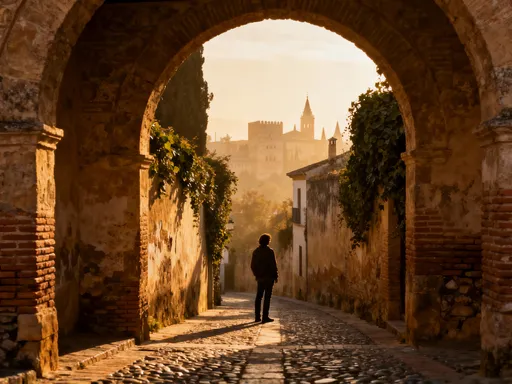
Beyond the major landmarks, the true soul of Luxembourg City reveals itself in its neighborhoods—Grund, Clausen, and the Fishmarket—where history is not isolated behind ropes but woven into the fabric of daily life. These districts lie at the bottom of the deep river valleys, accessible by steep staircases or winding roads, and offer a more intimate scale of urban living. Timber-framed houses with slate roofs line narrow streets, their facades weathered but proud. Former warehouses have been converted into cozy restaurants, wine cellars, and artisan shops, their arched doorways still bearing the marks of centuries-old craftsmanship. Courtyards hidden behind iron gates bloom with ivy and potted geraniums, offering glimpses of private life amidst public exploration.
The Grund, once a village in its own right, is particularly enchanting. Nestled in the Alzette Valley, it feels like a world apart from the administrative bustle above. The old watermill still stands, now a restaurant, and the river murmurs beneath stone bridges as ducks glide across the surface. Locals gather at outdoor tables in the late afternoon, sipping coffee or local beer, while children play near the playground. The atmosphere is relaxed, unhurried—a reminder that this city values quality of life as much as historical preservation. Clausen, once an industrial quarter, has transformed into a cultural hub, with galleries, music venues, and riverside terraces that attract both residents and visitors.
For the thoughtful traveler, a self-guided walking route connecting these areas offers the richest experience. Begin at the Fishmarket, with its charming square and historic guildhalls, then descend into the Grund via the Chemin de la Corniche, often called “the most beautiful promenade in Europe.” From there, cross the Alzette on the old bridge and follow the river path toward Clausen, passing by repurposed factories and green spaces. Along the way, pause at a café for a slice of tarte aux pommes or a cup of herbal tea. Let the pace be slow, the gaze attentive. It is in these unplanned moments—watching laundry flutter from a balcony, hearing laughter from an open window, noticing a carved stone cherub above a doorway—that the city feels most alive.
This kind of wandering is not about ticking off sights but about absorbing atmosphere. It’s about understanding how a city can honor its past while embracing the present. The old quarters demonstrate that preservation is not about freezing time but about allowing it to flow, carrying forward the best of what came before. For families, couples, and solo travelers alike, these neighborhoods offer a sense of discovery that is both gentle and profound.
Conclusion: Why These Stones Still Speak
Luxembourg City is not a museum. It is a living, breathing entity where history is not confined to textbooks or plaques but embedded in the very stones beneath your feet. Its landmark buildings—whether fortresses, cathedrals, or bridges—do not merely stand as relics of a bygone era. They participate in the present, shaping how people live, move, and remember. In a world increasingly defined by speed, change, and digital abstraction, this city offers a different rhythm: one of depth, continuity, and quiet dignity.
The experience of walking through Luxembourg City is ultimately about listening. Not with ears alone, but with all the senses. It is in the cool hush of the casemates, the play of light in the cathedral, the echo of footsteps on the Adolphe Bridge, that one begins to hear the whispers of time. These are not loud declarations but gentle reminders—of resilience, of beauty, of the enduring human need to build, protect, and create meaning.
For the traveler, especially one seeking connection and reflection, this city offers a rare gift: the chance to slow down and be present. It does not demand attention through spectacle but earns it through subtlety. Its lessons are not shouted but whispered—through arches, walls, and quiet courtyards. And if you listen closely, you may find that the stones have stories not just about the past, but about how to live well in the present. In Luxembourg City, history is not behind us. It walks beside us, one step at a time.