You Gotta See How Thimphu’s Architecture Tells Bhutan’s Soul
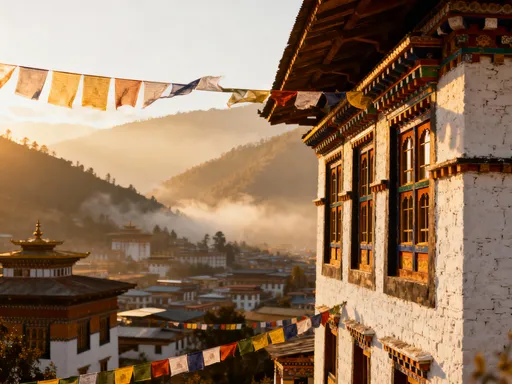
Walking through Thimphu, I didn’t just see buildings—I felt a story unfold. The traditional dzong style, whitewashed walls with wooden lattices, and prayer flags fluttering above rooftops—it all whispers centuries of culture. I never expected architecture to move me like this. In a world of glass towers, Thimphu holds firm to its identity, blending nature, religion, and craftsmanship. This isn’t just design—it’s devotion made visible.
First Impressions: Stepping Into a Himalayan Capital That Defies Expectations
Arriving in Thimphu, the capital of Bhutan, feels less like entering a modern city and more like stepping into a carefully preserved cultural sanctuary. Nestled in a deep valley along the banks of the Wang Chhu River, the city rises gently with the contours of the land, its buildings hugging the hillsides rather than dominating them. There are no skyscrapers, no neon-lit billboards, no chaotic tangle of highways. Instead, low-rise structures in soft whites, warm ochres, and earthy browns follow the natural gradient of the terrain, creating a skyline that feels organic and harmonious. This is not accidental—it is the result of a national philosophy that places cultural integrity and environmental balance above unchecked development.
Bhutan’s unique approach to progress is best captured in its guiding principle of Gross National Happiness, a framework that prioritizes well-being, cultural preservation, and ecological sustainability over mere economic growth. This ethos is physically manifested in Thimphu’s urban planning. Unlike many capitals that have sacrificed heritage for modernization, Thimphu enforces strict building codes requiring all new constructions to adhere to traditional architectural styles. Even government offices and commercial buildings incorporate sloped roofs, wooden eaves, and hand-carved details that echo centuries-old techniques. The absence of high-rises is not due to lack of resources, but by deliberate choice—a quiet resistance to the homogenized cityscapes that have overtaken much of the world.
As one walks through the city, the rhythm of life feels unhurried. Motor vehicles are present but not overwhelming, and the air carries a crisp mountain clarity. The pace of movement mirrors the architecture: measured, intentional, respectful of its surroundings. There is a sense that Thimphu does not rush to impress the world, but instead chooses to remain true to itself. This authenticity is what strikes visitors most—the realization that here, urban life has not erased tradition, but rather woven it into the fabric of the everyday.
The Heartbeat of Tradition: Dzong Architecture and Tashichho Dzong
At the core of Bhutan’s architectural identity lies the dzong—a majestic fortress-monastery that serves as both a religious and administrative center. These monumental structures are not relics of the past but living institutions, housing monastic communities, government offices, and sacred shrines under one vast roof. The most prominent example in Thimphu is Tashichho Dzong, a grand complex perched on the northern bank of the Wang Chhu River. Its towering whitewashed walls, punctuated by rows of black-framed windows and crowned with golden spires, rise with quiet authority against the backdrop of pine-covered mountains.
Originally built in the 13th century and reconstructed in the 17th, Tashichho Dzong remains a functional seat of power and spirituality. It houses the offices of the king and the central monastic body, making it one of the few places in the world where governance and faith coexist in such a tangible way. Visitors are not allowed inside the administrative sections, but even from the outside, the dzong exudes a profound sense of order and reverence. The massive entrance gate, adorned with intricate wood carvings and prayer wheels, leads into a series of courtyards where monks in maroon and saffron robes move silently through their daily rituals.
The architectural principles behind dzongs reflect a deep understanding of climate, defense, and symbolism. Constructed primarily from rammed earth, stone, and timber, these buildings are designed to withstand the region’s seismic activity and harsh winters. The thick walls provide natural insulation, while the inward-sloping design enhances structural stability. Overhanging wooden windows, painted in vibrant reds and blacks, allow light and air while protecting interiors from snow and rain. Inside, the walls are often covered in frescoes depicting Buddhist teachings, mandalas, and protective deities—each image serving both aesthetic and spiritual purposes.
Tashichho Dzong is not just a building; it is a symbol of Bhutan’s enduring values. Its preservation and continued use demonstrate how architecture can serve as a vessel for national identity. For travelers, standing before it is not merely an act of sightseeing—it is an invitation to reflect on how space, power, and faith can coexist in balance.
Everyday Beauty: How Homes and Buildings Keep Culture Alive
While dzongs and temples capture the grandeur of Bhutanese architecture, it is in the residential neighborhoods of Thimphu that tradition truly comes alive in daily life. Strolling through the quieter streets, one encounters rows of two- and three-story homes painted in pristine white, their facades accented with brightly colored wooden window frames in deep red, forest green, or royal blue. These windows are more than decorative—they are cultural markers, often carved with symbolic motifs such as the trabdraga (the “demon’s mouth”) to ward off evil spirits, or the phoenix and dragon representing protection and prosperity.
Each house follows a consistent architectural language: flat roofs for drying chilies and herbs, overhanging eaves supported by carved wooden brackets, and small balconies adorned with blooming geraniums and marigolds. Prayer flags are tied to roof corners, their colors fading gently with time and weather, carrying mantras into the wind. Even in the heart of the city, these homes maintain a rural charm, as if the entire capital were an extension of the village rather than a break from it.
This continuity is not left to chance. The Bhutanese government enforces strict architectural guidelines that require all new homes and renovations in Thimphu to conform to traditional design. Builders must use approved materials, colors, and structural elements, ensuring that modernization does not come at the cost of cultural erosion. As a result, even wealthier households, who could afford more luxurious or foreign styles, choose to build within the traditional framework. This collective commitment speaks volumes about national pride and the deep respect for ancestral ways.
Walking through neighborhoods like Changangkha or Kawangjangsa, one gains a sense of how architecture shapes community. There are no gated compounds or isolated villas; instead, homes are built close together, with shared pathways and open courtyards. Children play in the alleys, elders sit on doorsteps sipping butter tea, and neighbors greet each other by name. The built environment fosters connection rather than isolation—a stark contrast to the alienation often found in modern urban centers. In Thimphu, the house is not just a shelter, but a thread in the social fabric.
Modern Meets Traditional: Public Buildings with Cultural Integrity
One of the most remarkable aspects of Thimphu is how seamlessly modern infrastructure integrates with traditional aesthetics. Unlike many capitals where new public buildings adopt international styles, Thimphu’s institutions—libraries, hospitals, post offices, and research centers—embody a conscious fusion of function and heritage. The National Library of Bhutan, for example, features a sloped roof with traditional wooden rafters, a central courtyard for natural light, and hand-carved wooden doors depicting Buddhist parables. Inside, it houses ancient manuscripts and modern computers side by side, symbolizing the nation’s balance between preservation and progress.
Similarly, the Institute of Traditional Medicine Services stands as a testament to Bhutan’s commitment to holistic well-being. Its architecture mirrors that of a monastery, with whitewashed walls, arched windows, and a serene garden courtyard where medicinal herbs are cultivated. Patients walk through corridors lined with murals of healing deities, creating an atmosphere of calm and reverence. Even the post office and central bank incorporate traditional elements—sloped roofs, wooden latticework, and courtyards—ensuring that everyday civic experiences remain rooted in cultural identity.
This architectural consistency is not merely aesthetic; it reflects a deeper philosophy. By rejecting glass towers and steel facades, Bhutan sends a clear message: modernity does not require the abandonment of tradition. Instead, innovation can be expressed through the refinement of ancestral knowledge. Architects and planners in Thimphu work closely with traditional craftsmen to ensure that new buildings honor proportion, orientation, and symbolism. For instance, many structures are aligned with cardinal directions based on Vastu Shastra and Buddhist cosmology, believed to promote harmony and balance.
The absence of high-rises is not due to technological limitation, but a cultural decision to preserve the human scale of the city. Even the tallest buildings rarely exceed six stories, ensuring that views of the surrounding mountains remain unobstructed. This intentional modesty allows Thimphu to grow without losing its soul—a rare achievement in an era of rapid urbanization.
Sacred Spaces: Temples, Stupas, and Their Architectural Language
Beyond the grand dzongs and homes, Thimphu is dotted with smaller sacred structures that speak a quiet but powerful architectural language. Chortens, or stupas, stand at crossroads, hilltops, and temple grounds, their whitewashed domes and tapering spires marking points of spiritual significance. The most visited is the Memorial Chorten, built in honor of the third king of Bhutan. Its octagonal base supports a hemispherical dome, above which rises a 13-tiered spire—each level representing a stage on the path to enlightenment. Devotees circumambulate the chorten clockwise, spinning prayer wheels and murmuring mantras, their movements tracing centuries-old patterns of devotion.
Another awe-inspiring site is the Buddha Dordenma, a colossal gilded statue of Shakyamuni Buddha seated atop a hill overlooking the city. At 169 feet tall, it is one of the largest Buddha statues in the world, housing over 100,000 smaller Buddha statues within its base. The structure sits on a throne-like temple complex with meditation halls, murals, and offering altars. From its vantage point, visitors can see the entire valley of Thimphu, a visual metaphor for the Buddha’s watchful presence over the nation. The statue is not just a monument; it is an active place of pilgrimage, where families come to light butter lamps and monks lead chanting ceremonies.
Smaller temples, such as Changangkha Lhakhang and Tango Monastery, offer intimate experiences of spiritual architecture. These sites are often built into cliffs or nestled among rhododendron forests, their placement emphasizing harmony with nature. Their layouts follow mandala designs—geometric patterns representing the universe—guiding worshippers through a symbolic journey from the outer world to inner enlightenment. Altars are adorned with butter lamps, incense, and offerings of rice and flowers, creating a sensory experience that deepens the sense of sacredness.
What unites these spaces is their intentionality. Every curve, color, and orientation carries meaning. Red symbolizes compassion, white stands for purity, and the east-facing entrances welcome the rising sun as a metaphor for wisdom. For travelers, visiting these sites is not about passive observation, but about participating in a living tradition—one where architecture serves as a bridge between the earthly and the divine.
Materials, Craft, and the Hands Behind the Walls
The authenticity of Thimphu’s architecture lies not only in its appearance but in the materials and methods used to build it. Most structures are constructed from locally sourced stone, timber, and handmade clay bricks, minimizing environmental impact and supporting regional economies. Rammed earth techniques, where layers of soil are compacted between wooden forms, create walls that are both durable and naturally insulated. This method, passed down through generations, allows homes to stay cool in summer and warm in winter without relying on artificial heating or cooling.
Wood plays a central role, especially in windows, doors, and roof supports. Bhutanese carpenters use deodar cedar and pine, prized for their strength and resistance to insects. Each beam and bracket is hand-carved with precision, often featuring motifs like the endless knot, lotus flower, or wind horse—symbols of interconnectedness, purity, and spiritual energy. These carvings are not mass-produced; they are the work of artisans trained through apprenticeships that can last over a decade. The government supports these traditions through institutions like the Institute of Zorig Chusum, which teaches the 13 traditional arts, including wood carving, painting, and sculpture.
Construction techniques also reflect an understanding of seismic resilience. Bhutan lies in an earthquake-prone region, yet many centuries-old buildings remain standing thanks to flexible wooden frameworks and low center-of-gravity designs. The overhanging upper floors, supported by wooden corbels, allow for slight movement during tremors, reducing the risk of collapse. These methods, refined over centuries, are now being studied by modern engineers for their sustainability and effectiveness.
What makes this craft truly remarkable is the sense of continuity. Unlike in many countries where traditional building skills have faded, Bhutan actively preserves them through education, funding, and policy. Young apprentices learn alongside master craftsmen, ensuring that knowledge is not lost. When a new dzong or temple is built, it is not reconstructed with modern machinery alone, but with the same hands, tools, and prayers that shaped its ancestors. This dedication transforms architecture from mere construction into an act of cultural stewardship.
Why This Matters: Thimphu’s Architecture as Cultural Resistance
In an age of global sameness, where cities from Shanghai to São Paulo increasingly resemble one another in their glass-and-steel skylines, Thimphu stands as a quiet but powerful act of resistance. Its architecture is not a museum piece, but a living declaration of identity—a refusal to trade soul for speed. While other nations have erased their historic landscapes in the name of progress, Bhutan has chosen to grow differently, measuring advancement not by height of buildings but by depth of values.
This commitment goes beyond aesthetics. It reflects a holistic worldview in which culture, environment, and well-being are inseparable. The preservation of traditional architecture supports sustainable living, reduces carbon footprints, and strengthens community ties. It also safeguards intangible heritage—the knowledge, rituals, and spiritual meanings embedded in every carved window and prayer-flagged roof. In doing so, Bhutan offers a model for how nations can modernize without losing themselves.
For travelers, Thimphu invites a deeper way of seeing. It asks us to look beyond the surface of buildings and recognize the stories they tell—the devotion in a hand-painted mural, the wisdom in a centuries-old construction technique, the pride in a home built to honor ancestors. To walk through Thimphu is to witness a culture that values continuity, mindfulness, and harmony. It is a reminder that beauty is not only in the eye of the beholder, but in the intention behind the creation.
As the world grapples with climate change, cultural erosion, and the alienation of urban life, Thimphu’s architecture offers quiet wisdom. It shows that progress does not have to mean demolition. That growth can be gentle. That a city can be modern without being impersonal. And that sometimes, the most revolutionary act is simply to remain true. So the next time you travel, look closely. Let the walls speak. Let the design move you. Because in Thimphu, every building is a testament to a nation that chose to build not just for today, but for eternity.