Uncovering Kraków’s Soul Through Its Stunning Architecture
Walking through Kraków feels like flipping through the pages of a living history book, where every building tells a story. From Gothic spires to Baroque facades, the city’s architectural wonders don’t just impress—they whisper secrets of kings, craftsmen, and centuries gone by. I was unprepared for how deeply the design of this place would move me. It’s not just beauty; it’s legacy in stone. The way sunlight grazes a centuries-old cornice or how shadows stretch across cobbled squares at dusk creates a rhythm that speaks to the soul. In Kraków, architecture is not merely structure—it is memory made visible, a silent guide through Poland’s resilient spirit and artistic soul.
Arriving in Kraków: First Impressions That Take Your Breath Away
The first glimpse of Kraków’s skyline sets an emotional tone before a single step is taken. As the train pulls into the central station or a car winds through the city’s outskirts, the distant silhouette of Wawel Castle rises above the Vistula River like a crown resting on the earth. Its layered turrets and domes form a profile that is both regal and welcoming, a promise of grandeur to come. Nearby, the twin towers of St. Mary’s Basilica pierce the sky with their distinctive green copper domes, their asymmetrical heights adding character to the horizon. These landmarks do more than mark geography—they signal entry into a place where time is layered, not erased.
Morning light plays a crucial role in shaping these first impressions. As the sun climbs, it bathes the sandstone facades in a warm golden hue, revealing intricate carvings and weathered textures that daylight alone might overlook. The gentle glow on centuries-old walls brings out subtle details: a chiseled rose here, a worn saint’s face there. Even the sound contributes to the atmosphere—the soft echo of footsteps on uneven cobblestones, the distant chime of church bells carried on a cool breeze. These sensory cues ground the visitor in the moment, transforming arrival from a logistical act into a sensory awakening.
What makes these initial visuals so powerful is their authenticity. Unlike cities where modern development overshadows the past, Kraków’s core remains remarkably intact. The skyline has not been hijacked by glass towers or steel giants. Instead, the city’s architectural language remains consistent, speaking in a dialect of stone, tile, and timber. This continuity reassures the traveler that what lies ahead is not a museum recreation but a living, breathing urban organism. The architecture sets an expectation: this will be a journey through real history, not a staged performance.
For many visitors, especially those unfamiliar with Central European cities, the scale is unexpectedly human. Buildings rise no higher than five or six stories, their proportions designed for pedestrians, not distant observation. Balconies lean slightly forward as if eager to join the conversation below, and arched doorways invite exploration. This intimacy fosters a sense of belonging, as though the city permits you to walk its streets not as a stranger, but as someone welcomed into its long narrative. First impressions, in this case, are not fleeting—they become the foundation for a deeper connection.
Wawel Hill: Power, Piety, and Polish Identity in Stone
Rising gently above the banks of the Vistula, Wawel Hill is more than a scenic vantage point—it is the spiritual and historical heart of Poland. For centuries, this hilltop has hosted kings, bishops, and national ceremonies, each leaving their mark in brick, mortar, and mosaic. The ensemble of Wawel Cathedral and the Royal Castle stands as a testament to architectural evolution, where Romanesque foundations support Renaissance arcades and Gothic spires reach toward the heavens. Walking through its courtyards and chapels is like moving through a timeline carved in stone, each style reflecting the values and ambitions of its era.
The Wawel Cathedral, officially known as the Royal Archcathedral Basilica of Saints Stanislaus and Wenceslaus, has served as the coronation site for Polish monarchs since the 14th century and the final resting place for national heroes, poets, and statesmen. Its exterior blends multiple styles—thick Romanesque walls, delicate Gothic tracery, and the unmistakable golden dome of the Sigismund Chapel, added in the 16th century. That dome, gleaming in the sunlight, is not just an aesthetic triumph but a symbol of Poland’s golden age under the Jagiellonian dynasty. Crafted from gilded copper and supported by slender columns, it represents a fusion of Italian Renaissance ideals with local craftsmanship.
Inside the cathedral, the coronation altars and royal tombs offer a quiet reverence. The tomb of King Władysław II Jagiełło, carved from black marble, lies beneath a simple slab, while the ornate sarcophagus of King Sigismund II Augustus reflects the increasing sophistication of royal patronage. Each chapel tells its own story—some intimate and candle-lit, others grand and echoing with history. The guided tours, led by knowledgeable historians, bring these spaces to life, explaining not just who is buried where, but how architectural choices reflected political power, religious devotion, and cultural exchange.
Adjacent to the cathedral, the Royal Castle unfolds around a series of courtyards, each more refined than the last. The Renaissance courtyard, inspired by Italian palazzos, features graceful arcades with harmonious proportions and decorative stonework. Once home to royal apartments, throne rooms, and state halls, the castle now functions as a museum showcasing period furnishings, tapestries, and artwork. What stands out is not just the opulence, but the careful balance between grandeur and livability. These were not ceremonial shells but lived-in spaces, where decisions shaping a nation were made over candlelight.
Wawel’s significance extends beyond aesthetics. For Poles, it is a symbol of continuity and resilience. Damaged during wars and occupations, it has been painstakingly restored, each reconstruction a reaffirmation of national identity. The architecture here does not merely impress—it educates, inspires, and unites. To stand in its courtyards is to feel the weight of history, not as a burden, but as an inheritance.
The Main Market Square: Europe’s Largest Medieval Heartbeat
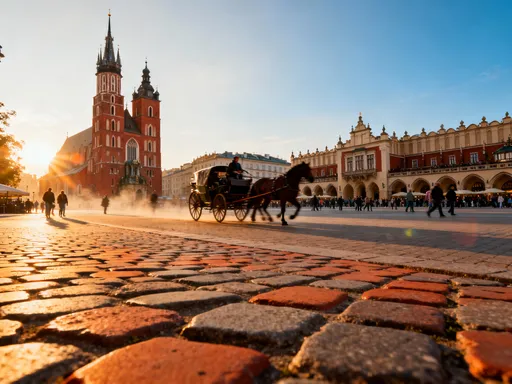
At the center of Kraków lies the Rynek Główny, the largest medieval town square in Europe and the city’s enduring social and architectural nucleus. Measuring approximately 200 meters on each side, this vast open space was laid out in the 13th century and has remained largely unchanged in layout, if not in detail. Surrounded by colorful townhouses, historic churches, and bustling cafés, the square pulses with life from dawn to dusk. It is not a relic frozen in time, but a dynamic space where past and present coexist in vibrant harmony.
The architectural genius of the square lies in its urban planning. Designed to accommodate markets, civic gatherings, and religious processions, its scale allowed for both grandeur and functionality. The uniform height of surrounding buildings—typically four to five stories—creates a sense of enclosure without oppression. Balconies, gables, and painted facades add visual rhythm, while the cobblestone surface, though uneven, connects the visitor physically to centuries of foot traffic. At the square’s center stands the Sukiennice, or Cloth Hall, a building that has served as a commercial hub since the Renaissance. Its long, low profile and row of arched windows reflect its original purpose: a covered marketplace for merchants trading in cloth, spices, and luxury goods.
Inside the Sukiennice, the ground floor still hosts stalls selling amber jewelry, hand-painted pottery, and traditional Polish crafts, preserving its mercantile spirit. Above, the upper level houses the Gallery of 19th-Century Polish Art, where visitors can explore national identity through painting and sculpture. The building’s survival through fires, invasions, and political upheavals speaks to its importance as both a commercial and cultural institution. Its very presence anchors the square, giving it a focal point that is both functional and symbolic.
Rising from the northern edge of the square is St. Mary’s Basilica, its two towers famously unequal in height—a result of different architects working in different eras. The taller, Gothic tower offers panoramic views of the city, while the shorter, Baroque one complements the skyline with its green dome. Inside, the church shelters one of Poland’s greatest artistic treasures: the wooden altarpiece by Veit Stoss. Carved from linden wood in the late 15th century, this massive triptych unfolds to reveal intricate scenes from the life of the Virgin Mary. When opened at noon, as it has been for decades, the sound of the hejnał—a trumpet call played from the taller tower—echoes across the square, a daily ritual that binds time, memory, and sound.
Completing the square’s architectural ensemble is the Town Hall Tower, all that remains of the original 14th-century town hall. Its asymmetrical lean, caused by centuries of settling, adds character rather than concern. Once the seat of civic administration, it now serves as a quiet museum and vantage point. Together, these structures form a harmonious yet diverse composition, each contributing to a whole greater than its parts. The square is not just admired—it is used, loved, and lived in, a true testament to enduring urban design.
Beyond the Center: Hidden Gems in Kazimierz and Podgórze
While the city center captivates with its grandeur, Kraków’s true architectural depth reveals itself in its districts. Kazimierz, once a separate Jewish town founded in the 14th century, now stands as a poignant and vibrant neighborhood where layers of history are etched into synagogues, courtyards, and street corners. Walking through its narrow lanes, one encounters a mosaic of styles: the Moorish revival of the Tempel Synagogue with its horseshoe arches and striped stonework, the restrained classicism of the Remuh Synagogue, and the austere beauty of the Old Synagogue, now a museum dedicated to Jewish life in Poland.
These buildings do more than showcase aesthetic variety—they tell a story of community, resilience, and memory. The synagogues, many restored after decades of neglect, are not merely preserved as relics but are actively used for prayer, cultural events, and education. The courtyards, once centers of religious study and social life, now host cafés and art exhibitions, blending past and present in quiet dignity. The architecture here is not loud or imposing; it is intimate, contemplative, and deeply human.
Just across the river in Podgórze lies another chapter of Kraków’s story. This district, developed in the 19th century, reflects a different architectural philosophy—one shaped by industrial growth and urban planning. The most poignant site is the former Jewish Ghetto, where the remnants of walls and memorials stand as silent witnesses. The Ghetto Heroes Square, with its empty chairs monument, uses minimalism to powerful effect, allowing architecture to speak through absence rather than ornament.
Further east, in Nowa Huta, the architecture shifts dramatically to Socialist Realism, a style imposed during the post-war communist era. Planned as a model workers’ city, Nowa Huta features wide boulevards, monumental buildings, and grand public spaces designed to inspire collective pride. St. Joseph’s Church, initially blocked by authorities for its religious symbolism, became a site of peaceful resistance. Its eventual construction, through citizen fundraising and persistence, turned it into a symbol of faith and defiance. The church’s traditional design, in deliberate contrast to the surrounding utilitarian blocks, asserts the enduring power of cultural identity.
These neighborhoods demonstrate that Kraków’s architectural richness is not confined to its tourist centers. Each district reflects a different ideology, era, and community, offering a fuller understanding of the city’s complex soul. To explore them is to move beyond postcard views and engage with the living, breathing reality of urban life.
Gothic, Renaissance, or Baroque? How to Spot the Differences
For the casual traveler, distinguishing between architectural styles can seem daunting. Yet with a few simple observations, anyone can begin to read the city like a visual historian. In Kraków, where styles overlap and blend, understanding the basics enhances appreciation and transforms sightseeing into discovery. The key lies in observing shapes, materials, and ornamentation—clues embedded in every doorway, window, and roofline.
Gothic architecture, dominant in the 13th to 15th centuries, favors verticality and light. Look for pointed arches, ribbed vaults, and flying buttresses—structural elements that allowed buildings to soar higher and include larger stained-glass windows. St. Mary’s Basilica is a prime example: its tall, narrow windows and intricate stone tracery draw the eye upward, creating a sense of spiritual aspiration. The use of sandstone, often weathered to a warm brown, adds to its medieval character.
Renaissance architecture, inspired by classical antiquity and flourishing in the 16th century, emphasizes symmetry, proportion, and harmony. Rounded arches, domes, and orderly facades replace Gothic verticality with balanced horizontality. The courtyard of Wawel Castle exemplifies this shift—its arcades feature consistent column spacing, geometric patterns, and decorative medallions. Materials become more refined, with limestone and stucco replacing rough-hewn stone. Windows are larger and more evenly spaced, reflecting a human-centered design philosophy.
Baroque, emerging in the 17th century, embraces drama and emotion. It uses curved lines, ornate stucco work, gilded interiors, and dynamic forms to inspire awe. The interior of the Church of St. Peter and Paul, with its sculpted figures seeming to descend from the ceiling, captures the theatricality of the style. Facades may appear restless, with undulating walls and elaborate window surrounds. Color plays a bigger role—pastel yellows, soft pinks, and white accents create a lively streetscape.
By learning to identify these features, travelers move beyond passive observation. A simple question—“Why are these arches pointed?” or “Why is this dome gilded?”—opens a conversation with history. Architecture becomes not just something seen, but something understood. This knowledge deepens connection, turning a walk through the city into an ongoing dialogue with the past.
Modern Touches in an Ancient City: Contemporary Design That Respects the Past
Preservation does not mean stagnation. In Kraków, thoughtful modern interventions demonstrate that new architecture can coexist with historic surroundings without diminishing their value. The key lies in sensitivity—respecting scale, materials, and context while introducing innovation. Two standout examples illustrate this balance: the Museum of Contemporary Art in Kraków (MOCAK) and the revitalization of the former Oskar Schindler Factory into a branch of the Kraków Historical Museum.
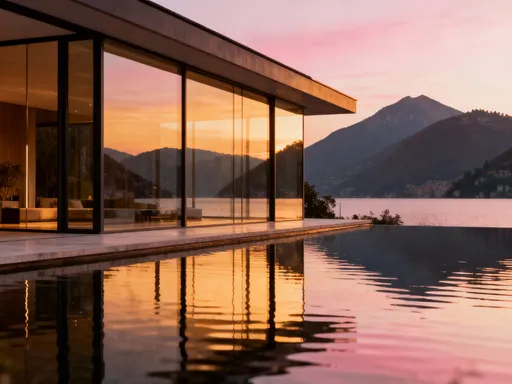
MOCAK, opened in 2011 on the site of former industrial buildings, presents a bold yet restrained design. Its angular, minimalist structure uses glass, steel, and concrete, but its low profile ensures it does not dominate the skyline. The building’s reflective surfaces mirror the surrounding greenery, creating a dialogue with nature rather than imposing on it. Inside, flexible gallery spaces allow for diverse exhibitions, while educational programs connect art to social themes. The architecture itself becomes a statement—modern, transparent, and forward-looking, yet grounded in its historical and environmental context.
The Schindler Factory Museum offers a different kind of transformation. Rather than replacing the original structures, architects preserved the industrial framework while adapting interiors for museum use. Exposed brick walls, steel beams, and original machinery remain visible, serving as authentic backdrops for exhibits on Kraków’s 20th-century history. Natural light floods through skylights and restored windows, enhancing the visitor experience without erasing the building’s past. The result is a space that honors memory while serving contemporary needs.
Elsewhere, boutique hotels and cultural centers demonstrate similar principles. The Pod Orłem Hotel, housed in a 19th-century building on the Main Square, underwent a careful renovation that restored historic details—stucco ceilings, wooden floors, original staircases—while integrating modern amenities. The design philosophy was clear: reveal, not replace. Such projects prove that preservation is not about freezing time, but about enabling evolution with respect.
These examples show that Kraków is not trapped in nostalgia. It embraces its past while allowing space for new voices. The city’s architectural conversation continues, with each generation adding its chapter in a language that honors what came before.
How to Experience Architecture Like a Local (Not Just a Tourist)
To truly connect with Kraków’s architecture, one must slow down. Locals do not rush from landmark to landmark; they live among these buildings, noticing how light changes on a façade at different hours or how a particular courtyard blooms in spring. Adopting this mindset transforms a visit from checklist tourism to immersive experience. Begin with slow-walking routes—perhaps a morning loop from Wawel to the Main Square, then through Kazimierz, allowing time to pause, observe, and reflect.
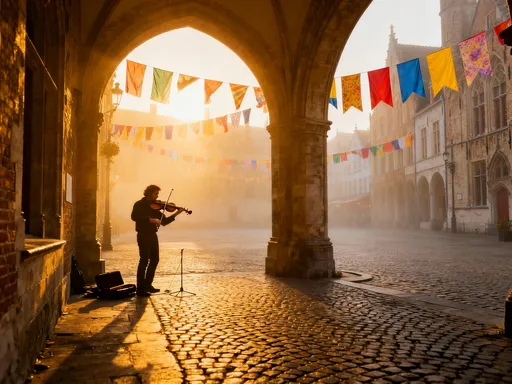
Timing matters. Visiting St. Mary’s Basilica at sunrise, when the interior is softly lit and nearly empty, offers a completely different experience than midday crowds. Similarly, the Main Market Square at dusk, when lanterns glow and musicians play, reveals its romantic soul. These off-peak moments allow architecture to speak without competition, letting details emerge—the texture of stone, the play of shadow, the quiet dignity of a centuries-old doorway.
Engage the senses beyond sight. Run a hand along a cool stone wall, listen to the echo of footsteps in a vaulted corridor, notice the scent of wood polish in an old church. These sensory inputs deepen memory and connection. For those inclined, sketching—even simple line drawings—forces closer observation, revealing proportions and details a photograph might miss. Photography itself, when done mindfully, becomes a form of meditation. Focus not just on grand facades, but on fragments: a weathered statue, a patterned tile, a wrought-iron gate.
Audio guides focused on design and history, rather than just biographical facts, can enrich understanding. Some local tours specialize in architectural storytelling, explaining not just when a building was constructed, but why it looks the way it does. These narratives transform buildings from static objects into living characters in the city’s story.
Ultimately, experiencing architecture like a local means seeing buildings not as backdrops for selfies, but as companions on the journey. They have stood for centuries, witnessing joy and sorrow, change and continuity. To walk among them with awareness is to participate in that legacy.
Why Kraków’s Buildings Stay With You Long After You Leave
Kraków’s architecture lingers in the mind not because it is beautiful—though it is—but because it feels alive. These buildings are not museum pieces behind glass; they are part of daily life, touched by sun, rain, and human hands. They carry the weight of history without being crushed by it, standing as testaments to creativity, faith, and resilience. To walk through Kraków is to understand that cities are not just places we visit, but conversations we join.
The emotional resonance comes from this continuity. A stone carved in the 1400s still bears the mark of its maker. A chapel built for a king now welcomes ordinary travelers. A synagogue restored after decades of silence once again hears prayer. In these acts of preservation and reuse, there is hope—a belief that what matters can be saved, that beauty and meaning endure.
More than any guidebook or photograph, it is this sense of connection that stays with you. The city speaks through its walls, not in words, but in form, light, and space. It invites you to look closer, to return often, and to find your own place within its story. In Kraków, architecture is not just something you see. It is something you feel, remember, and carry with you long after you’ve left its cobblestone streets behind.